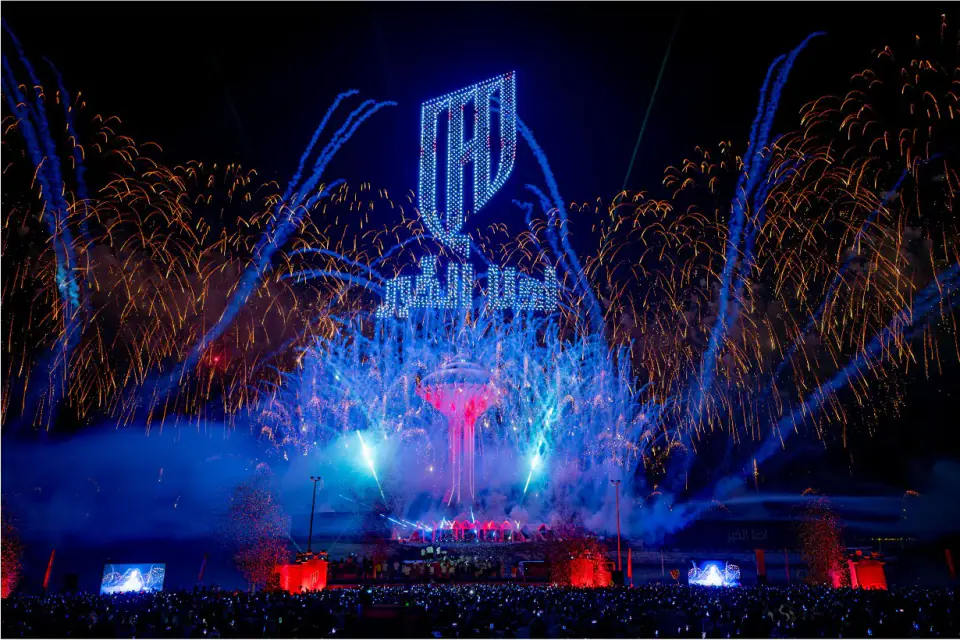
The first large event can make a new manager feel that everybody else understands a secret language. Most do not. They have simply learned where problems hide, which decisions become expensive and how early a question must be asked.
What scale changes
Scale does more than add guests. It multiplies dependencies. One access delay can hold five suppliers. One content change can touch screens, show calling, translation, speaker briefing and client approval. A crowd is not a collection of individual guests; it behaves as a system moving through finite routes and service points.
Your job is not to remember everything. It is to create a control system in which the right people see the right information before a dependency becomes a surprise.
- What must be true for the event to open safely?
- Which milestones have no practical recovery time?
- Which decisions require venue, authority, client or protocol approval?
- Where can one supplier block several workstreams?
- What evidence will prove readiness rather than merely describe confidence?
The operating model
Use a simple seven-part model from brief to close-out:
- Define: convert the brief into objectives, scope, exclusions, success measures and decision rights.
- Map: build the work breakdown, stakeholder map, dependency network and authority route.
- Plan: integrate schedule, budget, risk, procurement, safety, access, content and guest journey.
- Control: use one source of truth for versions, approvals, actions and changes.
- Rehearse: test technical sequences, guest flows, emergency roles, communications and backups.
- Operate: run readiness calls, log decisions and escalate against pre-agreed thresholds.
- Learn: reconcile cost, capture evidence, close actions and update the next project’s tools.
Give each critical output one accountable owner. “Production team” is not an owner. A named role with a due date and acceptance criterion is.
Hidden dependencies
Access: “Delivery at 08:00” is not a plan. Confirm vehicle pass, driver data, route, gate, height and weight limits, inspection time, dock slot, unloading equipment, material-handling route and storage.
Power: screens and lights do not plug into optimism. Confirm connected load, diversity, distribution, grounding, cable routes, backup, fuel or battery duration, isolation authority and technical sign-off.
Approvals: creative approval may not cover venue, authority, brand, security, protocol, accessibility or safety approval. Map each approving entity, submission format, lead time, revision cycle and final signatory.
Crew welfare: fatigue changes judgement. Plan shift lengths, breaks, hydration, meals, transport, accommodation, weather exposure and relief coverage. Welfare is an operational control, not a kindness added after the schedule.
The final ten percent: labels, cleaning, cable dressing, touch-up, seating alignment, speaker names, accessibility checks and final content versions consume disproportionate time. Protect a completion window after major installation rather than scheduling construction until doors.
Change control: a small stage move can affect rigging, screens, seating, sightlines, power, fire routes, budget and schedule. Every requested change should state reason, impact, cost, decision owner and implementation deadline.
KPI dashboard
These are recommended operating targets. Calibrate them to venue rules, event risk, team maturity and contract commitments.
| Metric | Formula | Cadence | Recommended target |
|---|---|---|---|
| Plan completeness | Approved required plans ÷ required plans × 100 | Weekly; daily in final week | 100% before mobilisation |
| Milestone reliability | Milestones completed on time ÷ milestones due × 100 | Weekly, then each shift | At least 90%; 100% for critical path |
| Approval first-pass rate | Submissions approved without rework ÷ submissions × 100 | Per approval cycle | At least 80%, improving by phase |
| Open high risks | High risks without accepted treatment past due date | Twice weekly; daily final week | Zero before doors |
| Change decision time | Decision time − complete change request time | Per request | Within agreed SLA; under 24 hours in final week |
| Critical test pass rate | Passed critical tests ÷ critical tests run × 100 | Each test session | 100% before opening |
| Budget forecast variance | (Forecast final cost − approved budget) ÷ approved budget × 100 | Weekly | Within agreed tolerance, commonly ±3–5% |
Leading and lagging indicators
Leading indicators include late approvals, weak first-pass submissions, overdue risk treatments, missed design freezes, incomplete crew credentials, falling test-pass rates and growing change volume. They warn that the plan is losing reliability while recovery time still exists.
Lagging indicators include opening delay, incident count, overspend, guest complaints, supplier claims and programme disruption. Review them, but do not manage the event by waiting for them. A beginner becomes dependable by learning to act on the earlier signals.
Illustrative worked example
Illustrative scenario only; this is not an Ahmed or client outcome. A new manager tracks 40 milestones during a build week. Thirty-six finish on time, giving milestone reliability of 36 ÷ 40 × 100 = 90%.
The number appears acceptable until the manager separates critical-path work. Only seven of eight critical milestones finished on time, or 87.5%, below the 100% critical-path target. The late item is authority approval for an outdoor structure. Installation cannot lawfully proceed, so the schedule’s apparent overall health is misleading.
The corrective action is not “push the supplier.” The manager escalates the complete submission, resequences unrelated indoor work, protects the inspection slot and gives the client a dated decision point. The dashboard works because it distinguishes important work from average work.
Personal discipline
Use controlled file names with revision, date, status and owner; avoid “final_final_v7.” Keep a decision notebook or digital log because pressure damages memory. On radio, use location, fact, impact and request. Do not tell the history of the problem while others are waiting for the channel.
Ask early. Experienced managers are not people who know everything; they know who carries the correct authority or technical knowledge and they ask before the answer becomes expensive. Confirm instructions by repeating the action, owner and deadline.
Calm does not mean passive. It means the team receives priorities instead of your stress. Your first large event will not be perfect. The goal is to create enough control that people trust you with the next one.
Evidence and standards
- UK HSE event safety guidance, covering organiser duties, venues, crowds, contractors and review.
- UK HSE venue and site design guidance, including suitability, shared control and clear responsibilities.
- ISO 31000:2018 Risk management guidelines, for structured risk identification, treatment and monitoring.
- US OSHA emergency preparedness guidance, for site-specific plans, trained roles and coordinated response.